Key Points
- Akita Bank has launched “Scrum Commons,” a unique entrepreneurship support program where the bank acts as a “co-founder” rather than just a traditional lender.
- The program utilizes a business consignment model, providing entrepreneurs with up to 13 million yen in funding and allowing them to develop their business within the bank’s structure to minimize personal financial risk.
- Participants gain access to Akita Bank’s extensive network of over 6,000 local companies and partnerships with major entities like the JR East Group for business testing and scaling.
- The ultimate goal is to create sustainable businesses that solve regional social issues in Akita, which can then be expanded across Japan and the global market.
Full Transcript (English)
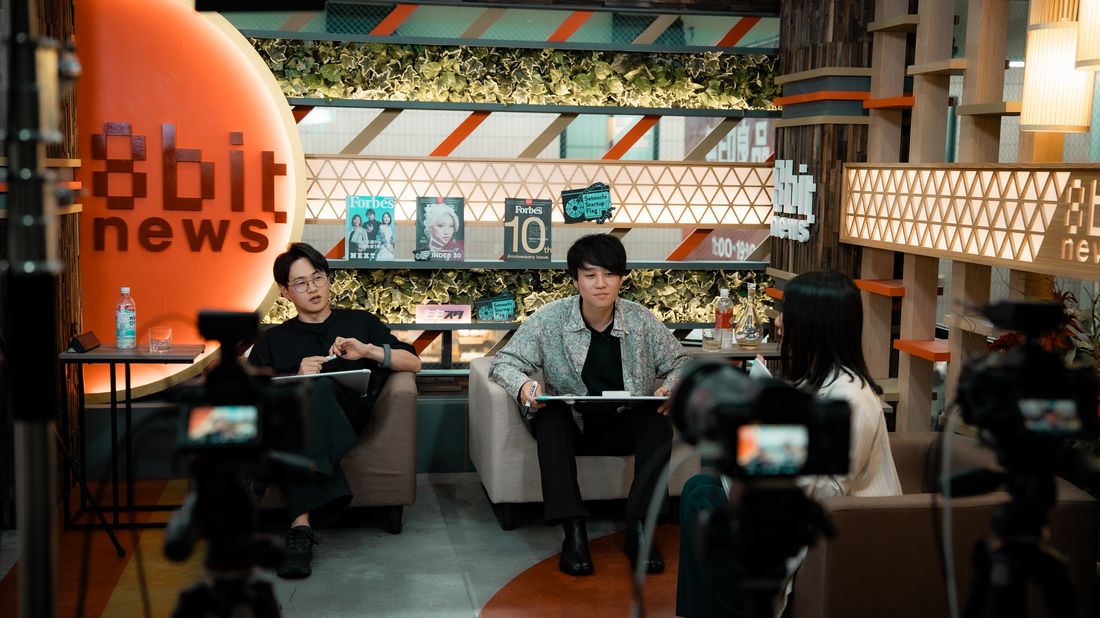
Host: In this segment of 8bitNews, we are looking at Akita Bank. They are currently launching various initiatives for regional economic development, but among them, they have announced an incredibly unique new entrepreneurship support scheme. What kind of initiative is it? Today, we have Mr. Miura from Akita Bank joining us. Welcome.
Guest (Rei Miura): Thank you for having me. I’m Miura.
Host: Mr. Miura, a very groundbreaking idea has been implemented within Akita Bank this time.
Guest (Miura): Yes, we have been developing this internally for quite a while. We wanted to solve all the challenges we’ve identified so far, so we are starting this with a lot of enthusiasm.
Host: Roughly speaking, Akita Bank will walk closely alongside people who want to start a business, providing various supports to ensure they launch in Akita and eventually scale to the world. Is that correct?
Guest (Miura): Yes. One major point is that the bank is changing its stance from being a “supporter” to a “co-founder.” That is our primary concept. It’s not just the bank; we want to build the entrepreneur’s business together with the entire region. Akita Bank becomes a co-founder, and as a team, we create the business with the whole community. We want to change the very foundation and structure of how businesses are started.
Host: So, whereas previously you might ask a bank for a loan or seek investment from a bank-affiliated VC, now the bank actually becomes a co-founder?
Guest (Miura): Exactly. We are changing the degree of involvement in growth. Usually, support starts just before or after a business is founded, once the idea seems interesting and funding or resources are injected. We are starting much earlier. Even for those who have an idea but haven’t turned it into a business yet, we become co-founders and work together to bring it to fruition. We enter as “players” from the start. We share both the risks and the returns from that early stage.
Host: Did you propose this idea, Mr. Miura?
Guest (Miura): Essentially, yes. We ran a program called “Scrum” for about two years, and while we successfully helped five businesses launch, we also saw many challenges. I proposed this new program to solve those issues and finally got us to the starting line. It took some effort to convince the executives, but since it was based on actual challenges we faced, they eventually understood and supported the realization of this structure.
Host: Let’s look at the details of the program using the materials you brought. The catchphrase is “You don’t have to start a business alone.”
Guest (Miura): Yes. As I mentioned, the traditional system gathers resources around those who have already managed to create a business. We want to change that fundamentally. Akita is often called a “challenge-advanced prefecture,” which is a positive way of saying the market is shrinking. Doing things the usual way is difficult here, so we have to change the method itself.
Host: That’s a common challenge across Japan—population decline and shrinking markets. How do you scale in that environment?
Guest (Miura): Traditionally, you enter a local market after you have a track record and trust. But by building the business within Akita Bank, we can utilize our existing network from day one. We offer three main resources: People (forming a scrum with the bank), Money (up to 13 million yen for business development), and Network (using Akita as a field for proof of concept).
Host: The “Money” part says 13 million yen. How does that work?
Guest (Miura): We sign a business consignment contract with the entrepreneur. Essentially, the bank commissions them to develop a new business. This means the entrepreneur receives a monthly payment from the bank, allowing them to focus entirely on the business. We also provide the funds for the proof of concept. It doesn’t come out of the entrepreneur’s pocket, so even if it doesn’t work out, they don’t end up with personal debt. The bank takes the financial risk.
Host: That is very generous. It removes the fear of failure that often stops people with families or limited savings from trying.
Guest (Miura): We highly respect entrepreneurs who take huge risks to grow businesses to IPOs, but we believe there should be other ways to start a business, especially in regional areas. We want to broaden the base of people who can try to change society through business. We provide a network of over 6,000 local companies, the “Akita Mirai Juku” for connecting with local successors, and partnerships with the JR East Group’s incubator at Takanawa Gateway to help businesses expand outside Akita.
Host: So, if a business succeeds within the bank, what happens next?
Guest (Miura): After about two years of development and testing, if we judge the business is viable, the business is transferred or sold to the entrepreneur. We help them with the financing for that transition as well. It’s like a lab or a school that turns into a real startup.
Host: This approach seems to require a lot of commitment from the bank employees too. They have to be “players” alongside the entrepreneurs.
Guest (Miura): Absolutely. It’s not about saying “this plan is no good, we’re out.” It’s about being a stakeholder. This is actually a new business venture for Akita Bank itself. By accumulating the know-how of how to successfully launch a business, the bank becomes more capable of supporting other local companies in the future. It creates a spiral of growth for the whole region.
Host: When is the deadline for applications?
Guest (Miura): The deadline is January 25th. After document screening and interviews, we plan to select three projects by March and start the actual work in April. We are looking for people with strong ideas and a desire to change society, even if they don’t have all the resources yet. We want to find partners to build the future of Akita with.
Host: It’s a very exciting initiative that could change the definition of a regional bank. Thank you for sharing this with us today, Mr. Miura.
Guest (Miura): Thank you very much.