Key Points
- Hiroyuki Takenaga of the Overseas Voters Network NY met with Representative Yasushi Adachi to review the legislative progress of overseas internet voting.
- Adachi provided a detailed timeline and internal documents showing how the “consideration clause” for internet voting was successfully included in recent legal amendments.
- The current goal is to move from “consideration” to a concrete “implementation” bill, potentially as early as the next Diet session, following a one-year review period.
- Adachi emphasized that the failure of the current postal voting system, highlighted by Takenaga’s advocacy, was a primary driver for the rapid legislative movement.
Full Transcript (English)
Takenaga: Hello, thank you for your hard work.
Interviewer: You’ve been visiting several places today as well?
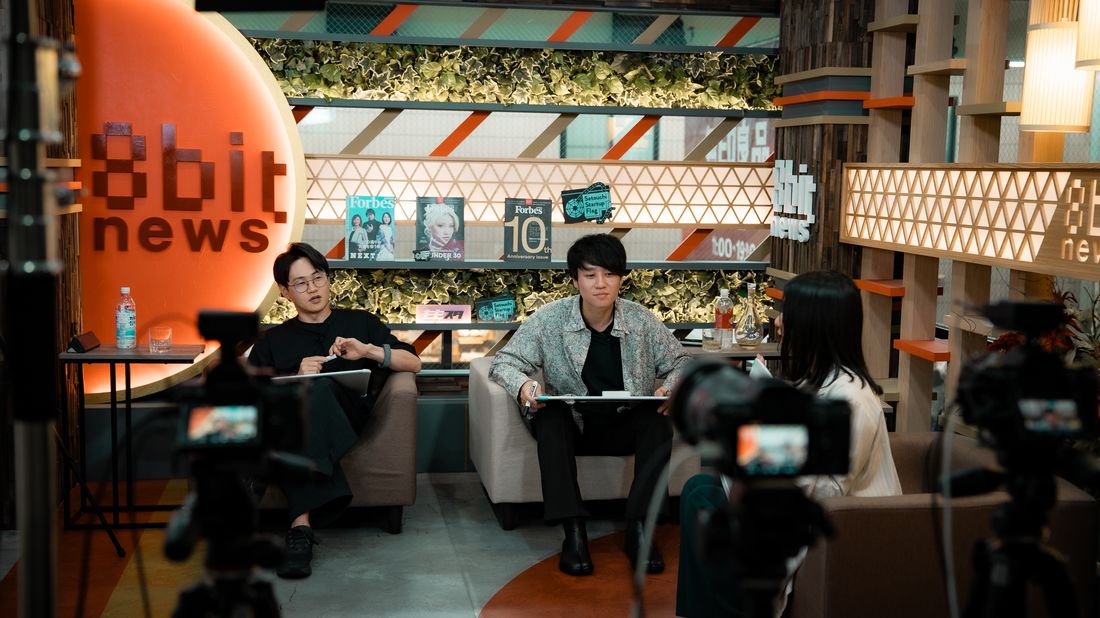
Takenaga: Today, I’m delivering materials and going to listen to some talks. This is the second one. This will be my last visit regarding politics in Nagatacho before returning to the U.S. I’m going to see Mr. Adachi. I’m really glad I could see him at the very end. I also wanted Mr. Kamai to come along. Having done this with 8bitNews, I felt we had to wrap things up with Mr. Adachi. This drama wouldn’t be complete without the piece that is Mr. Adachi. I’m glad we made it in time.
Interviewer: You had a long talk on his channel recently, but what do you want to discuss today?
Takenaga: I’ll be talking with Mr. Adachi about what exactly happened, as he is providing me with documents. We’ll go over the timeline to confirm the events and discuss what to do next. It will be a practical discussion on how to actually realize overseas internet voting. I’m looking forward to it.
Adachi: So, I’ve organized the materials. It’s quite a lot. Thank you very much. I’ll give a brief explanation. It looks like this. From my perspective, and based on materials I received from various people, it started with the relay questioning with Mr. Anno on April 2nd. Then on April 7th, I called the House of Councillors Legislative Bureau to start the discussion. From there, the process of drafting the bill followed this flow. This is the Inter-Party Council on Election Campaigns. There was a typo here, but we’ve been working on this since April. On April 10th, at the 13th meeting of the council, I started to get involved from my perspective. This is the overall schedule.
Takenaga: I met with Mr. Ochiai earlier today. I asked him how overseas internet voting ended up in “Plan B.” He said someone put it in there in the past, but he didn’t know who. It was already on the agenda.
Adachi: On April 7th, I told the Legislative Bureau we should have a meeting to discuss the structure of the bill. We looked at past laws, like “program provisions.” These set a direction for policy goals without defining specific details, which are then fleshed out by individual laws later. I decided to go with that line. We confirmed the bill’s structure by looking at past examples and exchanged opinions. This part here is what Mr. Nakatani was working on. I think his previous work is still relevant. At that time, I studied all the past domestic internet voting bills and started the discussion from there. We checked that the Ministry of Internal Affairs and Communications (MIC) was considering it properly. We also looked at how things were handled in Shijonawate City. We studied all of this. Then, at the Inter-Party Council, various materials came out. Here, overseas voting was already included under “others.” Many documents were produced. Initially, it was written very vaguely. This was before the “Plan A” and “Plan B” distinction. I collected all the materials. Here are the position papers from each party. It’s impressive. Each party submitted opinions on various items.
Adachi: Around April 14th or 15th, I created a one-page summary. I told everyone, “Let’s do it this way.” I submitted it to the Committee on Internal Affairs and Communications as well. Then more opinions came from each party. This is all in chronological order. Then “Plan A” appeared in May. Initially, it just listed items requiring consideration. It said “continued consideration.” That was completely unacceptable. There were four points listed for consideration. I wrote a personal memo saying, “These aren’t just items for consideration; we should just decide on them.” This was for an internal party study group. I argued it shouldn’t just be a consideration clause. I was looking at both the committee and other routes. I was convinced we shouldn’t delay it. I scrutinized the four points the LDP and the secretariat came up with and concluded there were no real issues. My mind was made up. On May 14th, I decided we had to go for it. I told the party we could definitely do this and encouraged everyone.
Adachi: In late May, new documents came out. That’s when Plan A, B, and C appeared. Parallel to that, the “Outline of the Bill” (Yoko-an) started to take shape. This came from the council’s secretariat, which the LDP runs. For the first time, the outline appeared alongside the plans. I saw this and thought, “Great.” It included the implementation clause we proposed. However, as a compromise, it was listed alongside a consideration clause. On June 15th, both were listed. The secretariat was trying to be mindful of us and the Democratic Party for the People (DPP) by including our proposal, but there was likely strong internal resistance, so they listed both. We discussed the deadline—whether to make it one year or leave it to general discussion. In the end, it became “consideration with a goal of one year after promulgation.”
Takenaga: Why was internet voting, which was in the lower-priority “Plan B,” written into the supplementary provisions as a consideration clause?
Adachi: The question of what “Plan B” actually meant was a constant theme throughout. Plan A goes into the main text of the law. Plan B was like a memo, but we pushed to have it in the supplementary provisions as a consideration clause. Once the outline of the bill emerged, we decided it had to be in the supplementary provisions. Now that the one-year consideration period is included, we need to focus on making sure that review actually happens. I’m wondering if we need to push for another bill in the extraordinary Diet session to mandate implementation, or if we should focus on the one-year review. The subject of the “consideration” is both the government and the Diet. It doesn’t explicitly say “the government,” which means everyone has to do it. This means the MIC now has an obligation to consider it, and we will continue to discuss it in the Diet. I’ll be asking the Ministry if they are ready to proceed. I think they will do it now. Their attitude has changed, as seen in the Minister’s responses. When the Diet makes this much noise, it’s easier for the bureaucracy to act. Politics decides, and since the Diet took it up so strongly this time, they’d rather settle it within a year than let it drag on.
Takenaga: So you mean a bill will be decided within a year?
Adachi: It’s a bit complicated, but since the law has been promulgated, we are now in that one-year window for consideration. After that, necessary measures will be taken. Normally, a government-sponsored bill would be an implementation law. If it’s a member-initiated bill, it might be a program law. If the government does it, it could be submitted as early as next year’s extraordinary Diet session. We don’t necessarily need a separate program law in between because the consideration clause is already there. I’m debating whether to introduce a bill that binds the government, including the timing of implementation.
Interviewer: Is there a key person who could make this go more smoothly?
Adachi: We are the second-largest opposition party. In these kinds of cross-party movements, the relationship between the largest ruling party (LDP) and the largest opposition party (CDP) is crucial. This time, the LDP, Ishin, and the CDP were willing to move forward even if it meant leaving the Communist Party behind. That’s why we reached this point. We managed to get that “one year” deadline in there. Usually, people say “three years.” Getting it down to one year was a big win.
Interviewer: It’s amazing how much progress was made in just one Diet session. Is this transparency something you do intentionally?
Adachi: Yes, I do it intentionally. I want to show everything. I’m giving you these documents specifically for that reason. In politics, the source of power is the citizens, the sovereigns. I don’t have money, a faction, or a massive party. For a politician like me to move things forward, I need the citizens on my side. We need to share information and run together. It’s not about just receiving a petition and reporting the result. It’s about running the race together. That’s my style. I joined this in late March, so it’s really only been three months. This is about the voting system—something that only changes once in decades. The current postal system is “dead.” Your long-term efforts and the data you provided made that clear. That’s why we had to act. There was a lot of drama, like the Digital Minister’s comments, which were quite interesting. I’m happy to share these materials. They represent the bulk of the interactions that took place in the Diet this time. I’ll let you read them carefully.