Key Points
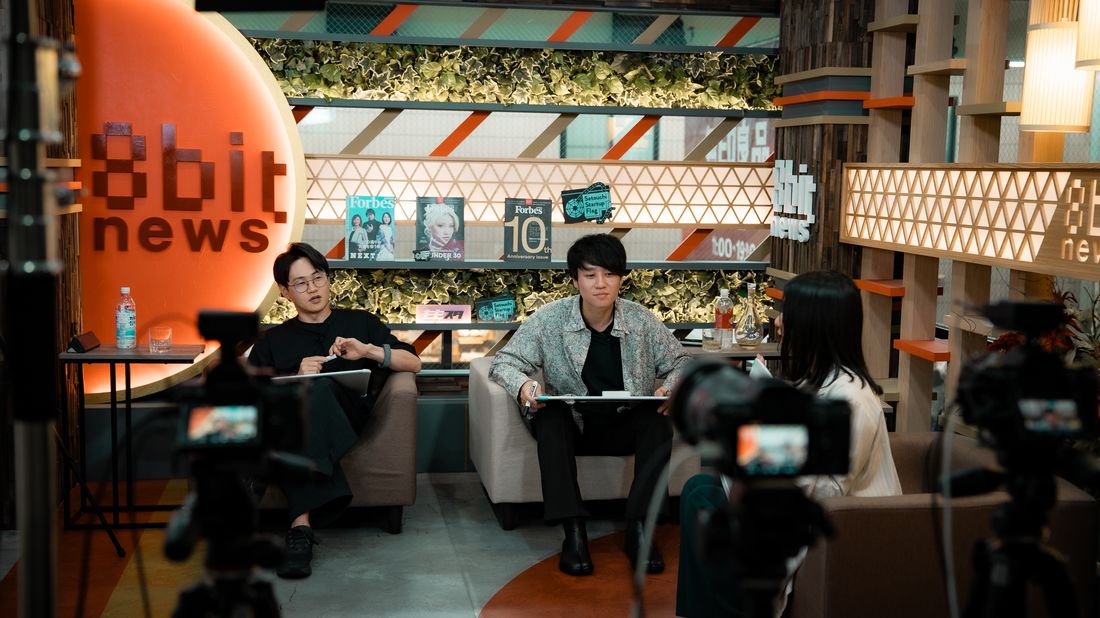
- Social entrepreneurs and local business leaders gathered in Okayama to discuss the future of regional wealth and social impact ahead of the BEYOND 2026 conference.
- Panelists defined “wealth” not just through economic metrics, but as the availability of life choices and the psychological sense of “mattering” within a community.
- The event featured pitches from startups focusing on diverse social issues, including senior entertainment, caregiving support, disability employment, and alternative education.
- Discussions highlighted the importance of collaboration between established local corporations and social startups to create a sustainable ecosystem for regional growth.
Full Transcript (English)
Norikazu Takeda (Chugin Financial Group): Ultimately, I believe the wealth we need to pursue from now on is about “choices.” It is about not being stuck with only one option or one direction. It is about being able to challenge yourself with various choices. Even if you fail, there are further options within that failure to try again. I feel we need to diligently create environments that allow for this.
Norikazu Takeda: Originally, our management philosophy at Chugin Financial Group was “co-creating wealthy lives.” When we thought deeply about this, we realized we didn’t fully understand what “wealth” actually meant. We decided we needed to think about it properly, which led to my participation in this pre-event.
Norikazu Takeda: The most important thing is that having choices is vital. This is something I have been saying for a long time and I am convinced of it. Whether people choose or not is up to them, but the ability to choose is what matters. Whether it is supporting people with disabilities or others, when the things they can do increase, they can live vibrantly by choosing to do them, or even by choosing not to. That existence of choice brings us closer to wealth. By having choices, even if you fail, you can keep searching. Regarding the theme of economic security, economic wealth is obviously necessary. Humans need food, clothing, and shelter. But beyond that, there is the wealth of the heart and mind. To achieve that, we need both social connection and mental/physical well-being. To create that state, we want to increase choices in both work and life. That is what I wanted to convey.
Host (Gaku Harada, taliki Inc.): The theme is the vision of wealth we aim for in Okayama. Before we dive in, having traveled to various regions, I want to ask about Okayama’s strengths or the essential values that might be overlooked because they don’t translate directly into economic value. Following what Mr. Takeda said about having choices and being able to challenge oneself, how do you feel about this?
Mariko Inokuma (OMOYA Inc.): When I was growing up in Sakaide, Okayama felt like “the city.” If we wanted to go shopping, we would go to Takamatsu or take the Marine Liner to Okayama. After seeing major metropolitan areas like Tokyo, and then returning, Okayama and Hiroshima look like mid-sized cities. But as Mr. Takeda said, Okayama is a very well-balanced prefecture. It has nature, culture, manufacturing, agriculture, and universities. Participating as a judge for the Okayama Innovation Contest, I see that deep tech is also strong. There are seeds of innovation everywhere. However, because it is close to the “average,” it might be hard to see its unique edge. Conversely, when you travel across Japan, more depopulated areas are forced to be “sharp” and unique. For example, in the northern part of Okayama, like Nishiawakura, they are sharp in their use of forest resources and social innovation. That uniqueness emerges because they are depopulated. It is quite difficult to draw a vision for a city that has urban elements like Okayama.
Mariko Inokuma: There is also “local love” or “hometown pride.” People might leave, but what brings them back? It could be natural resources, the way of life, or the interesting people and the love and wealth found there. If that is at the root, people return. If your heart is happy and you are in a state of well-being, and you grow up loving your hometown, you will eventually want to give back to that region, even if you don’t live there. I think that kind of circulation is possible.
Takao Funakura (Okayama University): I was thinking about what regional wealth is. I started with the hypothesis that the accumulation of individual wealth becomes the happiness of the region. Looking at it academically, well-being indicators are extremely multifaceted. There are over 100 indicators. However, there are commonalities: “relationships” (connections between people) and “autonomy/competence” (the ability to choose and do things yourself). When I see students working vibrantly in the region, I feel that might be wealth. To verbalize it, it is the sense of contribution—feeling that you created value and were helpful—and receiving feedback like “thank you” or “that’s great.” When both are satisfied, people look happy. There is a concept called “mattering,” which means the feeling that you are important to something or someone. My hypothesis is that increasing the total amount of “mattering” for each individual leads to regional wealth. This happens in work, family, hobbies, and communities. I want to think about how to increase that total amount.
Takao Funakura: Wealth, like well-being, is multifaceted. Individual wealth is essential for regional wealth, and it varies by person. There is short-term pleasure-based wealth and mid-to-long-term “ikigai” (purpose-based) wealth. Rather than just defining it, we should think about the conditions that produce wealth. That is why I suggested increasing “PBL” (Project Based Learning) with social entrepreneurs. I believe that is a condition for increasing wealth. Universities are great places for this because they are centers for learning, regardless of immediate economic value. I want to create wealth starting from the university.
Sota Yamane (Gragol Inc.): We provide entertainment for seniors centered around “Ground Golf.” Currently, entertainment and fun for the elderly seem to be left behind. We want to create a world where the elderly are not just “supported” but can be the protagonists of society throughout their lives. We want to make old age something to look forward to.
Ryohei Suzuki (Plusrobo Inc.): We operate “Sketter,” a matching platform for “incentivized volunteering” in the caregiving and welfare sector. We call it a “help-out economy” or a “regional mutual aid economy.” It is a mechanism where regional issues are solved by regional residents, creating a new type of economy that isn’t just about earning money.
Host (Gaku Harada): Regarding the sub-theme of collaboration between local companies and social entrepreneurs, what is needed to create more of these cases? In this alliance, how do we create wealth as the final goal? Perhaps through industry revitalization or connecting the local to the global.
Norikazu Takeda: When thinking about social issues, the ones that remain are often those that are hard to turn into money. Social entrepreneurs are challenging these “unprofitable” areas, which in a way means they are venturing into “blue oceans.” For local companies to engage, they first need to visualize the value and technology they have built up. Then we need to coordinate how that visualized value can connect with social issues. By hitting the strong values of the region against these blue ocean markets, I hope we can achieve something great.
Mariko Inokuma: In my experience matching local companies with social entrepreneurs, the biggest hurdle is that companies need clear metrics like sales, performance, and internal justifications. Meanwhile, social entrepreneurs are tackling businesses where the market is still uncertain and results are hard to measure with traditional KPIs. Their timeframes and evaluation axes often don’t align. Also, local companies often see a “vision” as a “goal” (a target to reach), while social entrepreneurs see a “vision” as “hope” (an abstract future state). We need to align these mindsets. We must agree that the vision is “hope” and then find multifaceted ways to evaluate the significance of the company’s involvement, including non-measurable factors.
Takao Funakura: If AI continues to advance at this pace, the opportunities for “mattering” might decrease because efficiency makes things easier. If we feel “anyone could do this, it doesn’t have to be me,” well-being decreases. This is where universities can be used. Companies can join as researchers and engage in social activities as a form of “exploration,” “learning,” or “human resource investment.” This scheme involving social entrepreneurs, local companies, and students can work. Within the uncertainty of social entrepreneurship, there might be seeds for future business. As AI handles the “desk work,” the value of being on-site and feeling things firsthand increases. I want the university to be a “well-being manufacturing industry.”
Host (Gaku Harada): We probably can’t reach a single definition of wealth. But I’ve realized that “redefining wealth” can be an action guideline. Wealth changes with the times. While keeping that in mind, we should take action—earning money, creating strategies, and moving between the global and local levels. I think it would be great if we could all do these things together.
Kaho Taniguchi (3volt Inc.): About 76% of working-age people with disabilities are not employed by general companies. Our business, “Mediavolt,” introduces disabled talent to companies. We identify tasks within the company that they can handle and provide support until they are settled. We aren’t just doing “welfare”; we are working to stop the loss to the Japanese economy by turning “charity” into “capability.”
Hiroto Nakafuji (Ichijiku Inc.): We are building schools. There are children from all sorts of backgrounds, and we want to create a world where everyone can receive a better education. Specifically, we operate “free schools.” We want to create a society where educational resources gather, built by our generation.
Host (Gaku Harada): I feel Okayama is really heating up. Everyone has such diverse thoughts and is challenging new things. The ecosystem here feels very robust. As we look toward the next steps, we need to think about what “correct growth” looks like. If we just chase growth like during the bubble era, we might repeat the “lost 30 years.” We need to consider what growth is appropriate for humans to live humanely and wealthily. That is the theme we are exploring.