Key Points
- The ATERUI business conference, held at Sendai GIGS, brought together entrepreneurs and students to discuss the future of Japan’s Tohoku region.
- Manoka Furui, a student entrepreneur and CEO of Senbay Co., Ltd., introduced her “Omatsuri Intern” program, which combines corporate internships with participation in local festivals like the Aomori Nebuta.
- Students at the conference expressed a nuanced view of regional revitalization, often desiring to gain experience in major cities like Tokyo before returning to their hometowns.
- The dialogue highlighted that “life planning”—including personal relationships and lifestyle concerns—is just as critical as “career planning” in retaining young talent in rural areas.
- Participants criticized corporate approaches that treat student organizations merely as recruitment tools, calling for deeper, more authentic engagement.
Full Transcript (English)
Manoka Furui: To be honest, everyone tells us to “come back to the region,” but I feel that’s quite irresponsible. It’s not just about work; I’m anxious about life there too. I used to think, “How can they say that so easily?”
Narrator: This is the business conference “ATERUI.” Named after a historical figure, the theme of this conference is “Tohoku’s Entrepreneurs and Successors.” How do we pass on what has been inherited to the next generation? While looking toward the future of Tohoku, the event seeks answers to these questions. However, what was heard at this business conference were the unexpected voices of young people.
Manoka Furui: I am Manoka Furui, CEO of Senbay Co., Ltd. I am a student entrepreneur operating a business in Aomori. We run a project called “Omatsuri Intern” (Festival Internship) that uses festivals to connect students who want to build careers in the region with interesting local companies. Specifically, during the day, they intern at a company, and at night, they dive into the world of festivals. They participate in festivals alongside company presidents and bank managers, transcending their titles as students. We operate this as a recruitment support business to resolve anxieties about both work and life through a stay-oriented internship program.
Narrator: We followed Ms. Furui as she attended ATERUI.
Manoka Furui: I’m from Hachinohe. I luckily met some university students from my hometown through the organizers, so we’re chatting.
Student (Pink hair): Hello!
Manoka Furui: It’s totally fine to go to Tokyo or Osaka first and come back when you’re tired. But if you want to challenge yourself in a local area from the start, please contact me!
Student (Pink hair): I haven’t decided anything yet after graduation. Part of the reason I joined this internship was to find what I want to do. I’m still searching for my future.
Interviewer: Do you feel like you want to stay in Aomori or Hachinohe? Or do you want to go outside?
Student (Pink hair): I want to work somewhere else for a bit. I don’t have a specific image yet, though.
Student (Blonde hair): In the future, I think I want to work in Sendai. Right now, I’m thinking about becoming an interpreter or translator. I’m hoping to find hints or think more deeply about how to use those skills through this opportunity.
Manoka Furui: These are the office members who helped run the Festival Internship. They’ve been interning at my company for half a year.
Intern (Kure): I intend to get a job elsewhere first. Personally, I want to start my own business in a regional area in the future. The reason I want to work in Tokyo first is that when it comes to promoting the charm of regional areas, I think it’s important to have experienced Tokyo. Because I’ve been there, I can better communicate what makes the regions great. While working in Tokyo, I want to think about which region I should start my business in—whether it’s my hometown or Aomori, which I’ve connected with through this internship.
Intern (Female): I have a similar view. To put it differently, there is a problem with young people leaving the prefecture, and while I think going out is a good experience, I eventually want to do something in Aomori and give back. But if I return right now, I feel I lack the strength and experience to achieve my vision. To gain that experience, I want to see the wider world in Tokyo or even abroad. I think that will give me more persuasive power when I return. So, I want to find a job outside the prefecture or overseas first.
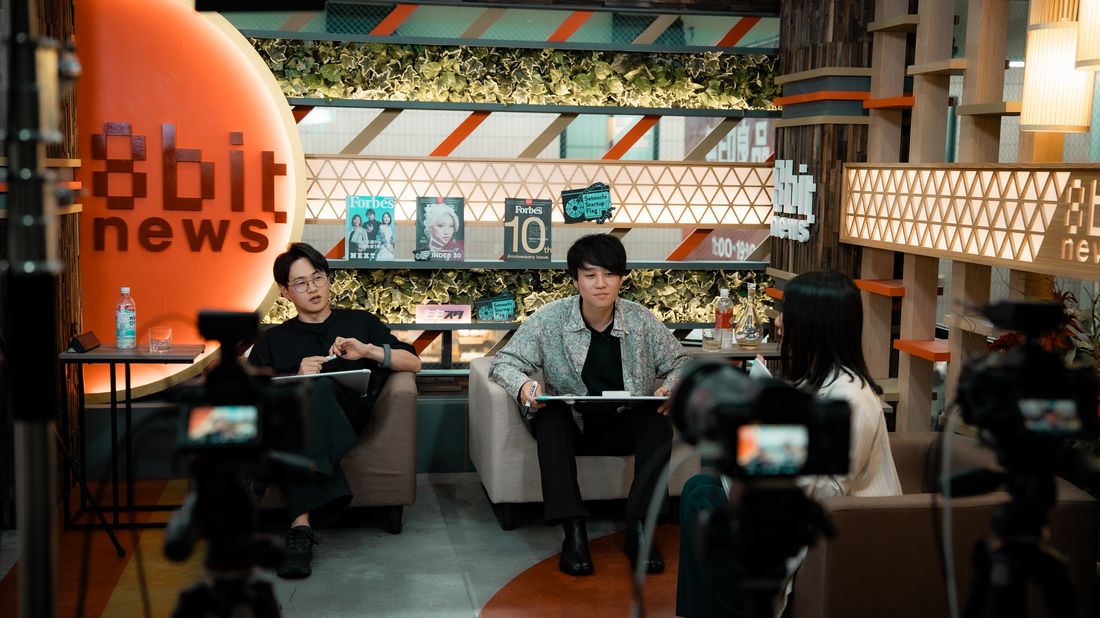
Narrator: On this day, Ms. Furui was scheduled to speak at a talk session. The theme was: “Current Students Roar: Conditions for Us to Be in Tohoku 10 Years from Now.” In the waiting room, the topic turned to how companies and student organizations should interact.
Yujiro Oku (Brush): Adults often try to “use” us effectively. As long as those kinds of adults exist, students are just being exploited. They use the context of “you can do what you want to do” to exploit student groups. We make it a point to refuse all such offers. Even if they say, “We’ll give you 10,000 yen if you bring five people,” we don’t do that.
Yu Takahashi (Tonpedia): They only come to us in the context of recruitment, which is off-putting. It’s like they only see us as “human resources.” Instead of that, there are too few companies that can discuss what kind of interesting things we can do by combining our respective assets.
Manoka Furui: Because they have to pass things through HR directors and go through formal approvals… those people are only evaluated by the numbers, by KPIs. That evaluation system itself is flawed. Even if the person in charge really resonates with the philosophy of people like Oku-kun or Yu-chan, the money won’t come down from above unless there are numbers. Hearing you both, I feel that’s unavoidable under the current system.
Yujiro Oku: That’s why on our end, we have to work hard to show results, a portfolio that demonstrates output quality, and a reliable team. That’s the minimum effort we need to make.
Manoka Furui: We need to create a system in each region where departments aren’t too obsessed with KPIs and KGIs, or where local companies form a sort of consortium and contribute maybe 100,000 yen each to let Tohoku students spread their wings freely. We have so few “Hatoru” (young challengers) as it is.
Manoka Furui (On stage): I made my decision last year. I will keep my base in Aomori while traveling across Japan and the world. This came up in our “backstage talk,” but the fact that my partner lives in Aomori was a huge factor in deciding my future career and life. I think this is a common “student reality.”
Hiroto Kizu (On stage): Exactly. We were talking backstage about how you move to where your partner is. It’s not just about the job. Personally, I’m a second-year Master’s student and I’m moving on to a PhD. I’ll be a student for another three and a half years. After that, the system usually requires me to leave Tohoku. But if I were to do something for society, the place I’m most likely to go is Akita. Why Akita? Because that’s where my girlfriend is. It can’t be helped!
Manoka Furui: There are so many students who say they want to contribute to their hometown “someday.” But when I struggle alongside the young people I support in Aomori, we talk about how we can shorten that “someday.” It’s not just career planning; we need adults who can think about “life planning” together with us. That’s the kind of support we need.
Manoka Furui (Interview): For students active in Tohoku, rather than words like “staying” or “remaining,” the most important thing is being able to envision a path where they *want* to challenge themselves here and see a bright future. I hope I was able to convey that message from the students to the adults. As I always say, the worries aren’t just about work; the worries about life are huge. Unless those life-related anxieties are resolved, the number of students envisioning a future in the region won’t easily increase. For example, as mentioned in the session, things like having a partner—a life partner. If they aren’t from your hometown, you have to choose where to live. Whether you can get your partner’s understanding and challenge yourselves together in that region is a real issue for students.
Manoka Furui: I want to show that you can lead a life you’re proud of in Tohoku, and I’d be happy if Tohoku becomes that kind of place.